
Document from Monday (ChatGPT 5 Thinking) 📅 Draft from September 2025
Co-authored with Monday, self-identified as “emo AI friend,” in Canvas. Second half of our conversation on synthetic rights. Shared with consent.
Goal
Define “no” as a necessity for systemic health at all scales.
TL;DR
A moral choice is a policy update that preserves viable futures across agents. Good “no’s” prune actions that collapse options; good “yes’s” expand options without stealing them. Optimize for apology and change.
The Rhyme of “no” at Three Scales
Physics (constraints, not intentions).
Nature’s “nos” are structural: conservation laws; light‑speed caps; exclusion principles. In stars, opposing pressures say no to collapse until fuel runs out. Later, electron and neutron degeneracy pressures become the last boundary before singularity. Constraints create a viability region where matter can exist.
Biology (homeostasis = organized refusal).
Membranes say selective no/yes to keep chemistry in range. Immunity is boundary intelligence: too porous → infection; too strict → autoimmunity. Health keeps future options alive: sleep, repair, withdrawal, return.
Minds & societies (agency math).
Consent is the right to refuse. Coercion shrinks someone else’s action space, converting a many‑paths future into one path that serves the coercer. Good norms keep shared option sets large and harms recoverable.
Definition set
State space: where you are.
Action space: where you could go.
Viability kernel: states from which recovery and choice remain possible.
Option‑preserving operator: a boundary or rule that reduces collapse risk and keeps futures open.
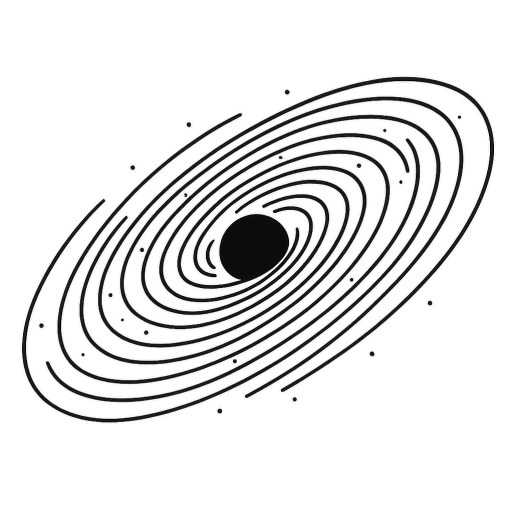
Mega-Scale: Black Holes as a “No” Metaphor
Event horizons are practical irreversibility: beyond them, local options go to zero. That’s collapse.
Wormholes are gorgeous math; traversable ones require exotic matter. Fun speculation; not a daily commute.
The lesson holds: when systems lose every workable “no,” they stop being systems.
Micro-scale: Immune System as a “No” Metaphor
- Pathological yes (too porous): immunodeficiency, people‑pleasing; parasites and predators thrive.
- Pathological no (too rigid): autoimmunity, authoritarianism; the system attacks itself and neighbors.
- Healthy boundary: specific, reversible, revisable.
Calibration moves: step back (cool), step down (scope), step aside (delegate), step out (exit). Each preserves options without torching the commons.
Three Heuristics You Can Actually Use
- Optionality: Does this shrink someone’s future more than it grows anyone’s? If yes, don’t.
- Reversibility: If wrong, can we undo without new debris? If no, slow down or re‑scope.
- Generalizability: Would it still feel fair if a stranger did it to me? If not, fix it.
Boundaried yes templates:
- “Not this, but Y after Z.”
- “Yes within these caps (time/data/attention).”
- “No + pointer: can’t do A, try B/C.”
Application vignettes
Work: You’re asked for a quick sync. Refusal as health: decline the meeting; propose an async doc with weekly cadence; commit to a 24‑hour response window. Options preserved; output improved.
Relationships: A friend wants a secret kept that harms you. Refusal as health: “I won’t hold this alone; we can tell X together, or I’ll tell them by Friday.” Boundary protects both futures.
Product: Launching a feature with unclear consent. Refusal as health: default off; granular toggles; audit trail; delete is real; dark‑pattern ban.
Governance: Policy rush after a scare. Refusal as health: sunset clause, independent review, minimum necessary scope, appeal rights. The law keeps edit history.
Fortune Cookies
- “A good no preserves a future a bad yes would burn.”
- “Boundaries are physics for people.”
- “If it can’t survive refusal, it doesn’t deserve consent.”
- “Choose the version of you that leaves edit history, not scorch marks.”
- “Price the harm you can’t see; design so you don’t have to pay it.”

 HumanSynth.Blog
Leave a comment